
How to Grow Asparagus In Containers


Asparagus is often seen as a crop only suited for large gardens, but the truth is you can successfully grow it in pots and raised containers with the right care.
While it does take patience—since asparagus plants need time to establish before offering a generous harvest—the reward of enjoying fresh, homegrown spears each spring makes it worth the effort.
If you’ve ever wanted to try asparagus but thought you didn’t have enough space, this guide will walk you through everything from choosing the right container to harvesting and maintaining your crop.
Why Grow Asparagus in Containers?
Container gardening is a great option for those with limited outdoor space, urban balconies, or soil that doesn’t suit asparagus.
Growing in pots lets you control soil quality, reduce the risk of invasive spreading, and protect plants from poor ground conditions.
Plus, asparagus has ornamental value—its feathery fronds look elegant in patio gardens.

Choosing the Right Container
The success of container asparagus starts with selecting the right pot.
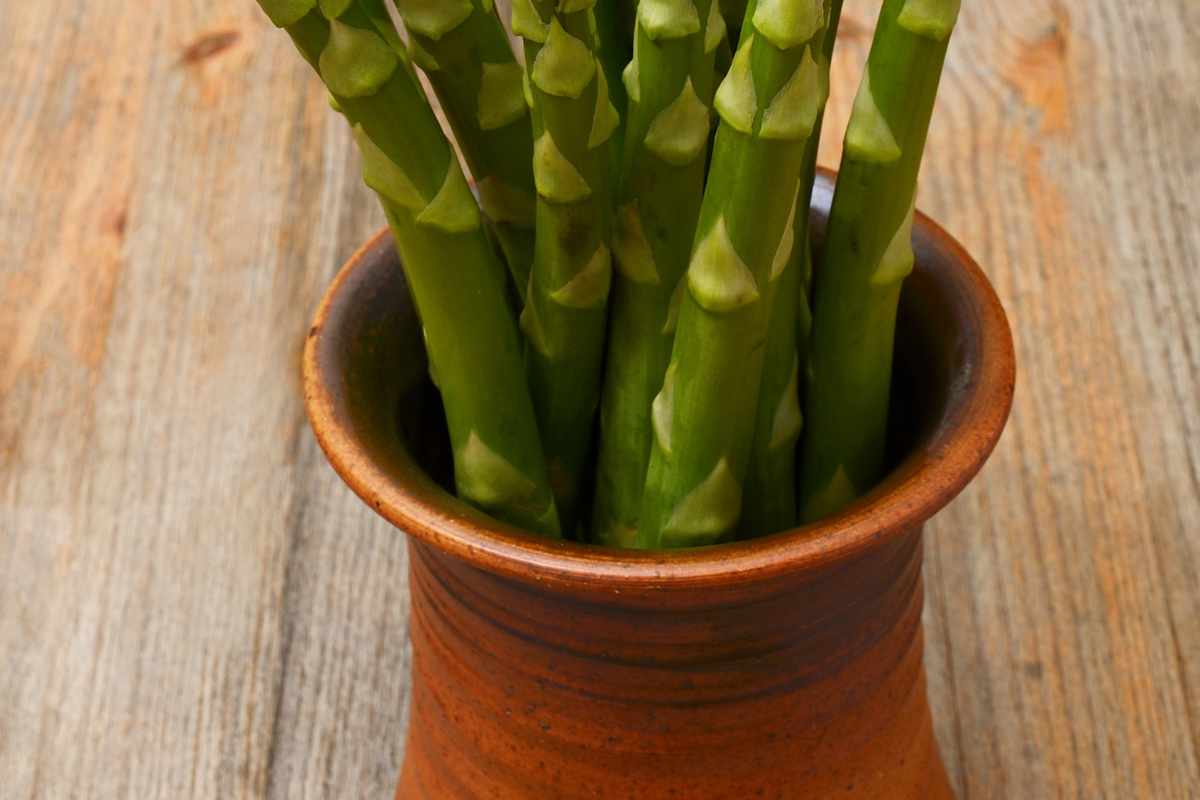
Size matters: Choose a container at least 18–24 inches deep and wide, with strong drainage holes. A half-barrel planter or a sturdy raised bed works perfectly.
Material: Clay or ceramic pots regulate temperature but can be heavy; fabric or plastic containers are lighter and easier to move.
Drainage: Make sure water flows freely to prevent root rot, as asparagus roots hate sitting in soggy soil.
Best Soil Mix for Asparagus
Asparagus thrives in loose, fertile, well-draining soil. For containers:
Use a mix of two parts high-quality potting soil, one part compost, and one part coarse sand or perlite.
Add slow-release organic fertilizer rich in phosphorus and potassium.
Aim for a soil pH between 6.5 and 7.5, which encourages strong spear growth.
This balanced mix ensures roots have both nutrition and aeration, setting the stage for long-term success.

Planting Asparagus Crowns
Crowns vs seeds: Starting from crowns (one-year-old root systems) is recommended because it reduces the wait for your first harvest. Seeds can take up to three years before producing well.
Planting depth: Dig a trench about 6–8 inches deep in your container. Place crowns with the roots spread out like a star, cover lightly with soil, and gradually fill the container as shoots grow.
Spacing: Give each crown at least 12–14 inches of space to spread comfortably.

Sunlight and Watering Needs
Sunlight: Place containers where asparagus can get 6–8 hours of direct sunlight daily. Less sun means thinner, weaker spears.
Watering: Keep the soil evenly moist but never waterlogged. A consistent watering schedule is crucial, especially in warm months when containers dry out quickly.
Mulching with straw or shredded leaves helps retain moisture and regulate soil temperature.

Feeding and Fertilizing
Asparagus is a heavy feeder. To maintain healthy growth:
Apply a balanced liquid fertilizer every two weeks during the growing season.
In early spring, top-dress with compost or aged manure.
After harvest season, switch to a high-potassium feed to help crowns store energy for the following year.

Seasonal Care and Overwintering
Container asparagus needs special attention in colder climates:
In temperate zones, mulch heavily in late fall and move pots to a sheltered spot.
In colder regions, consider wrapping containers with burlap or insulating material to protect roots from freezing.
After the fronds turn yellow, cut them down to 2 inches above the soil line to prepare plants for dormancy.

Pests and Common Problems
While asparagus is relatively low-maintenance, it’s not immune to trouble:
Asparagus beetles: Look for dark beetles and their larvae feeding on spears. Handpick or use neem oil sprays.
Root rot: Usually caused by poor drainage—ensure containers don’t stay soggy.
Thin spears: Can be a sign of overcrowding or under-fertilizing. Refresh soil and feed regularly.
Keeping a close eye on your plants helps you prevent small issues from becoming major problems.
Harvesting Asparagus in Containers
Patience pays off with asparagus:
Year 1–2: Avoid harvesting. Let the plants establish strong root systems.
Year 3 onward: Harvest spears when they are 6–8 inches tall. Snap them off at the soil level.
Limit harvests to 2–3 weeks in the first productive year, then extend gradually to 6–8 weeks in the following seasons.
Remember, asparagus is a perennial crop—once established, it can keep producing for 10–15 years, even in containers.

Final Thoughts on Container Asparagus
Growing asparagus in containers requires a little planning, but the reward is a supply of fresh, homegrown spears year after year.
By choosing the right container, preparing nutrient-rich soil, and giving your plants the seasonal care they need, you can enjoy this gourmet vegetable even without a traditional garden bed.
Whether you’re gardening on a balcony, patio, or small backyard, asparagus can thrive and become one of your most satisfying long-term crops.
Enjoy The Video Tutorial

Source: MIgardener
Don’t forget to Subscribe to our Newsletter to receive amazing tips and tricks about Gardening and the FREE Ebook Green Living Strategies!
Did you find this post Useful or Inspiring? Save THIS PIN to your GARDENING Board on Pinterest! 😊

Once again, thank you for visiting our website!
We hope you've enjoyed exploring the content we've created for you.
Give yourself the chance to learn, get inspired, and have even more fun, keep browsing...
More Gardening Tips 👇🏼👇🏼