
How to Grow Potatoes in Containers or Pots


Growing potatoes in containers or pots is a great space-efficient way to enjoy fresh, homegrown potatoes.
Whether you have a small apartment or a limited garden space, container gardening makes it possible to cultivate these delicious tubers with minimal hassle.
In this guide, we’ll walk you through everything you need to know, from selecting the right containers to harvesting your potatoes, to ensure a successful crop.
Why Grow Potatoes in Containers?
Container gardening offers several benefits, especially for those with limited outdoor space.
Here’s why potatoes are an excellent choice for container gardening:
Space-saving: Ideal for small spaces, such as balconies, patios, or indoor areas.
Improved soil quality: You control the soil mix, preventing soil-borne diseases.
Better pest control: Potatoes in containers are less prone to pests like slugs and beetles.
Easy harvesting: No need to dig up large plots of land—simply tip the container to collect your potatoes.
Now that you know why container potato gardening is a great option, let’s dive into how you can get started.
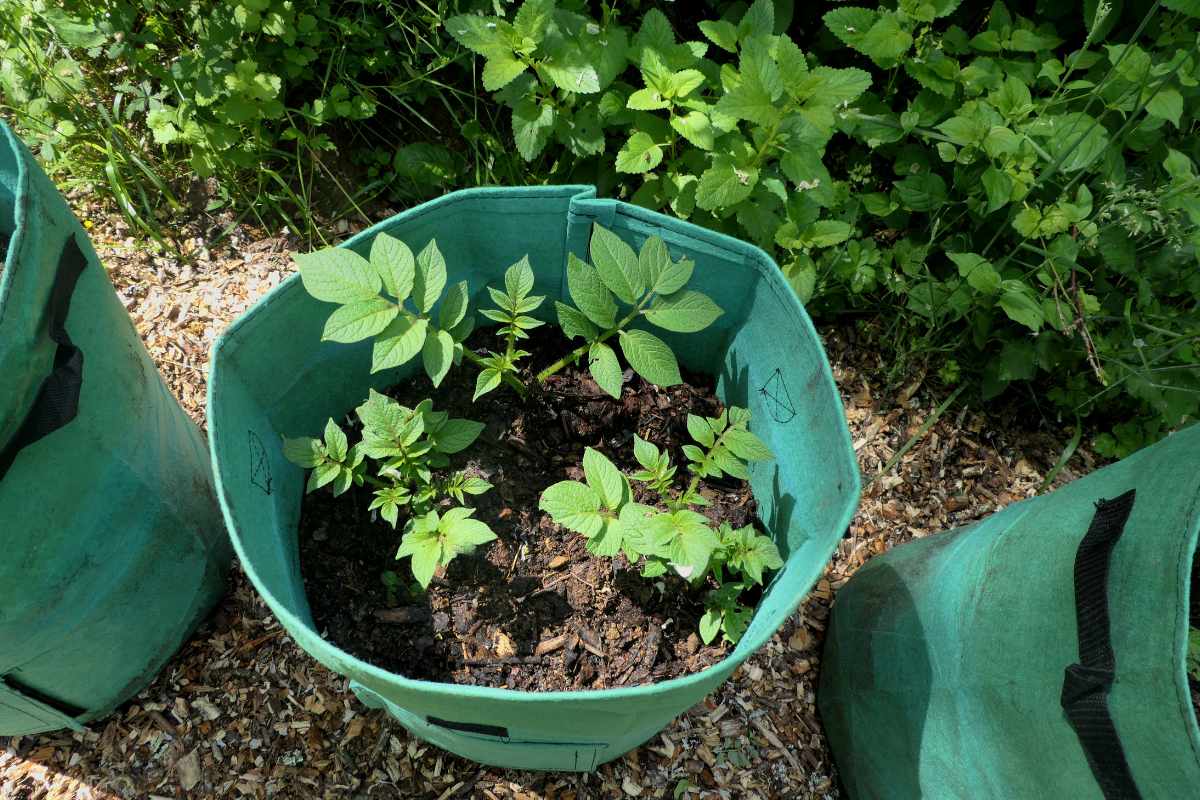
Choosing the Right Container for Potatoes
Selecting the right container is the first step in ensuring your potatoes grow successfully. Here’s what to consider:
Size of the Container
The size of your container directly affects how many potatoes you can grow. A container should be at least 12 inches deep to accommodate the potato plants’ root systems and give them enough room to grow.
Ideal sizes: A container with a capacity of 10 to 20 gallons is perfect for growing potatoes. You can also use larger containers, but avoid going too small.
Material
Containers come in various materials, such as plastic, fabric, and ceramic.
Fabric pots or containers with good drainage are ideal as they allow the roots to breathe and prevent waterlogging.
Drainage
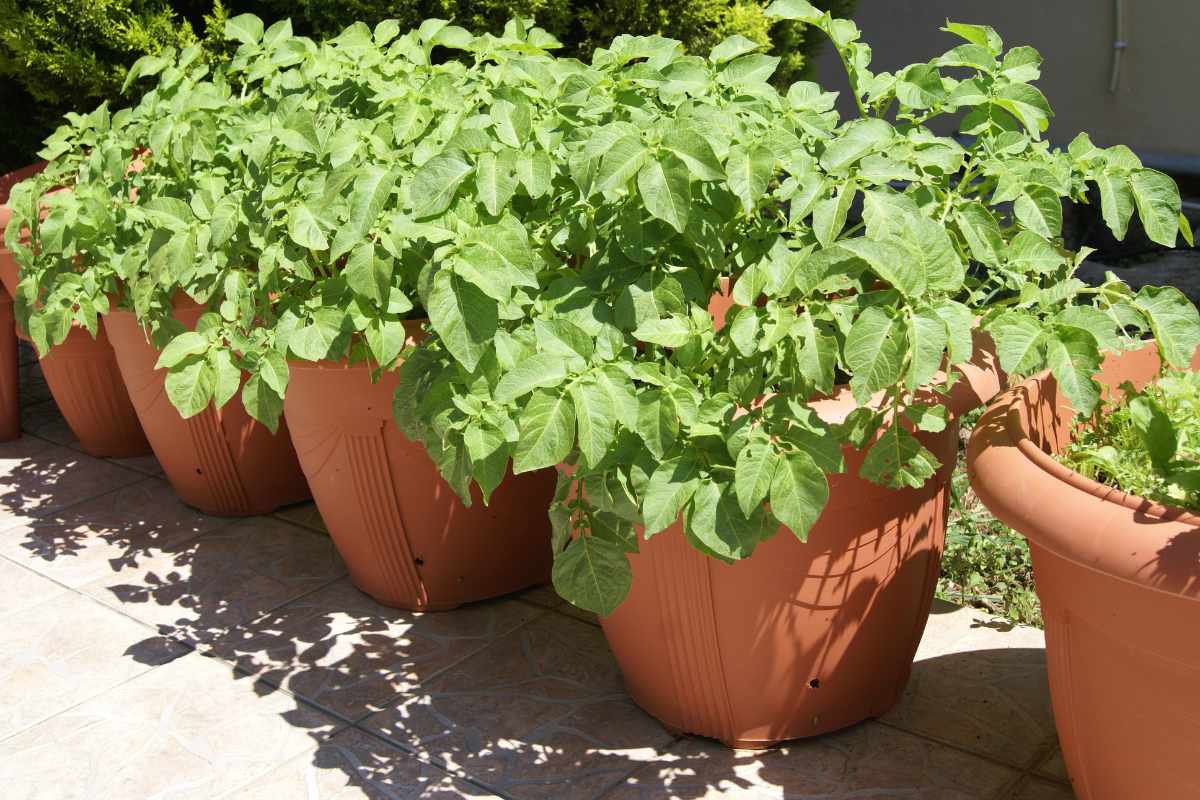
Proper drainage is critical for potato health. Ensure your container has multiple drainage holes at the bottom to allow excess water to escape.
Examples of Good Containers
Plastic buckets: Easy to find and affordable, plastic buckets make great containers for potatoes.
Fabric grow bags: These are breathable and provide good air circulation for the roots.
Wooden crates: If you're looking for a more rustic aesthetic, wooden crates work well for growing potatoes, as long as there’s sufficient drainage.
Selecting the Right Potato Variety
Not all potatoes are created equal, and choosing the right variety is key to success.
Here are a few potato types that are perfect for container gardening:
Early-season varieties: These mature quickly, usually within 60-90 days, making them ideal for container gardening.
Examples: ‘Red Pontiac’, ‘New Potatoes’, ‘Yukon Gold’.
Fingerling potatoes: These small, elongated potatoes grow well in containers and are perfect for smaller spaces.
Examples: ‘French Fingerling’, ‘Russian Banana’.
Salad potatoes: These are great for boiling and have a waxy texture that holds up well when cooked.
Examples: ‘Charlotte’, ‘La Ratte’.
When selecting your variety, consider your taste preferences and how much space you have for growth.
Preparing the Soil for Potatoes
Potatoes thrive in well-drained, loamy soil that’s rich in organic matter.
Here’s how to prepare the perfect growing medium:
Soil Composition
A good potato soil mix should consist of:
1 part compost: This provides essential nutrients.
1 part peat moss or coconut coir: Helps retain moisture without becoming waterlogged.
1 part perlite or sand: Adds aeration and drainage to prevent compacted soil.
pH Level
Potatoes prefer a slightly acidic soil with a pH of 5.5 to 6.0. If your soil is too alkaline, you can lower the pH by adding sulfur or pine needles.
Planting Your Potatoes
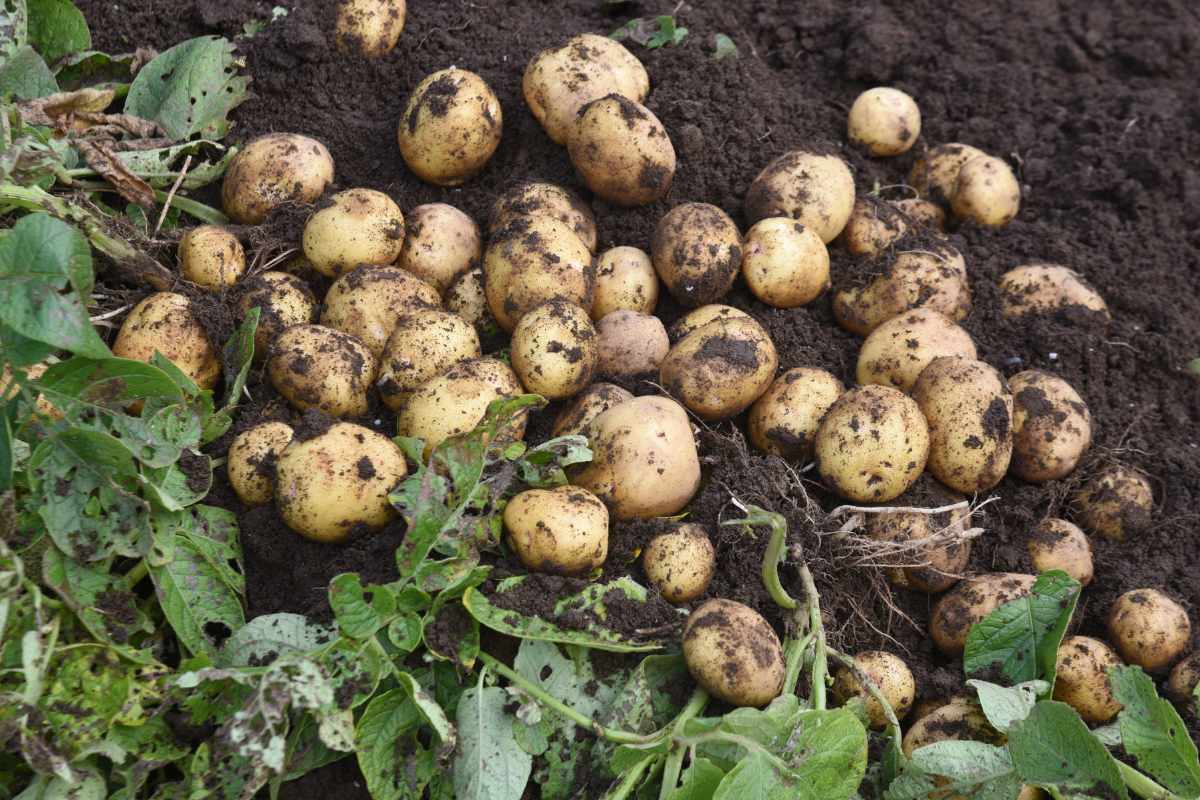
Now that your container is ready, it’s time to plant your potatoes. Here’s a step-by-step guide to getting started:
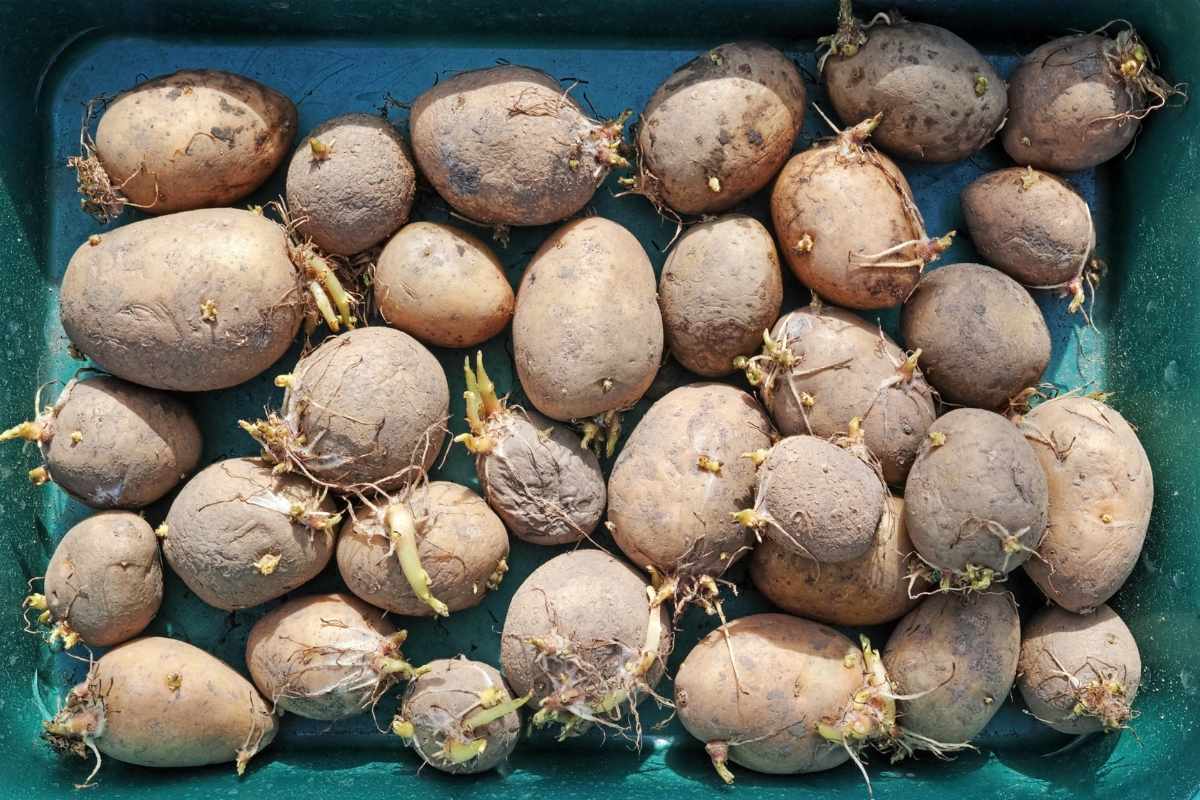
Step 1: Preparing the Seed Potatoes
Start with certified seed potatoes rather than store-bought potatoes, as the latter may carry diseases.
Cut large seed potatoes into pieces, each with at least one “eye” (the small buds from which new plants will grow).
Allow the cut pieces to dry for 1-2 days to form a protective callus, preventing rot when planted.
Step 2: Planting Depth
Plant your seed potatoes about 4-6 inches deep in the container.
Place 2-3 seed pieces in a 10-gallon container, and ensure they are spaced about 6-8 inches apart.
Step 3: Covering with Soil
After placing the seed potatoes in the container, cover them with your prepared soil mix.
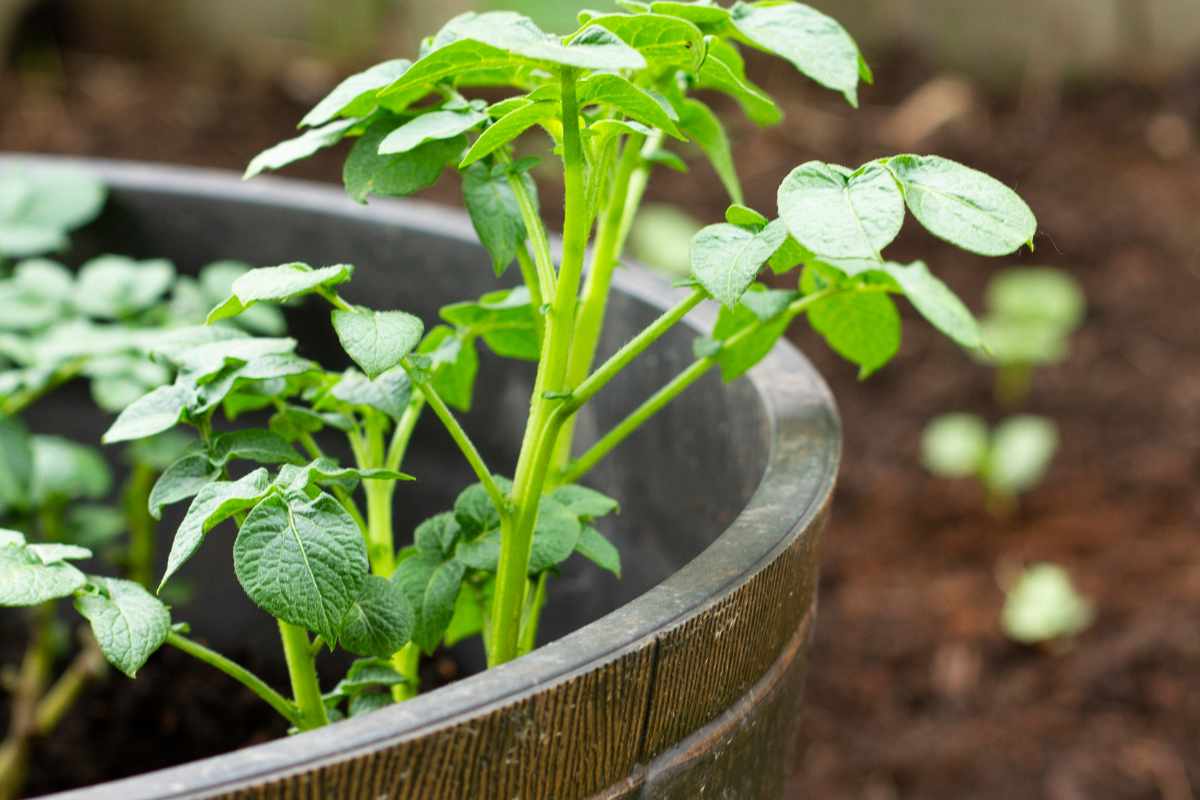
As the plants grow, continue adding soil around the stems, a process called hilling. This encourages the plants to produce more tubers along the stem.
Caring for Your Potato Plants
Potatoes are relatively low-maintenance, but they still need some attention throughout the growing season. Here are key care tips:
Watering
Potatoes need consistent moisture but do not like to sit in water. Water the plants regularly, especially during dry spells. Be mindful not to overwater.
When the plants are flowering, reduce watering to avoid tuber rot.
Pest and Disease Control
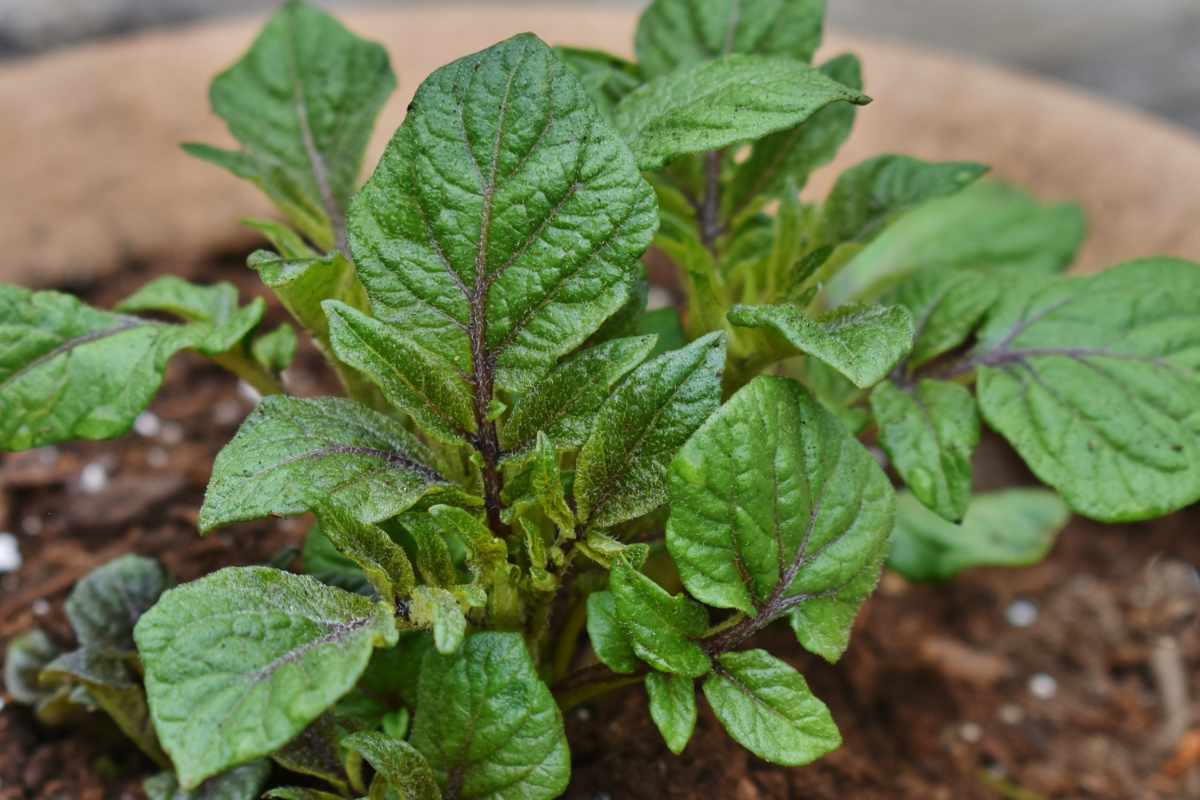
Pests: Keep an eye out for aphids and potato beetles. Remove them by hand or use insecticidal soap.
Diseases: To prevent blight, ensure good air circulation around your plants and avoid overhead watering.
Fertilizing
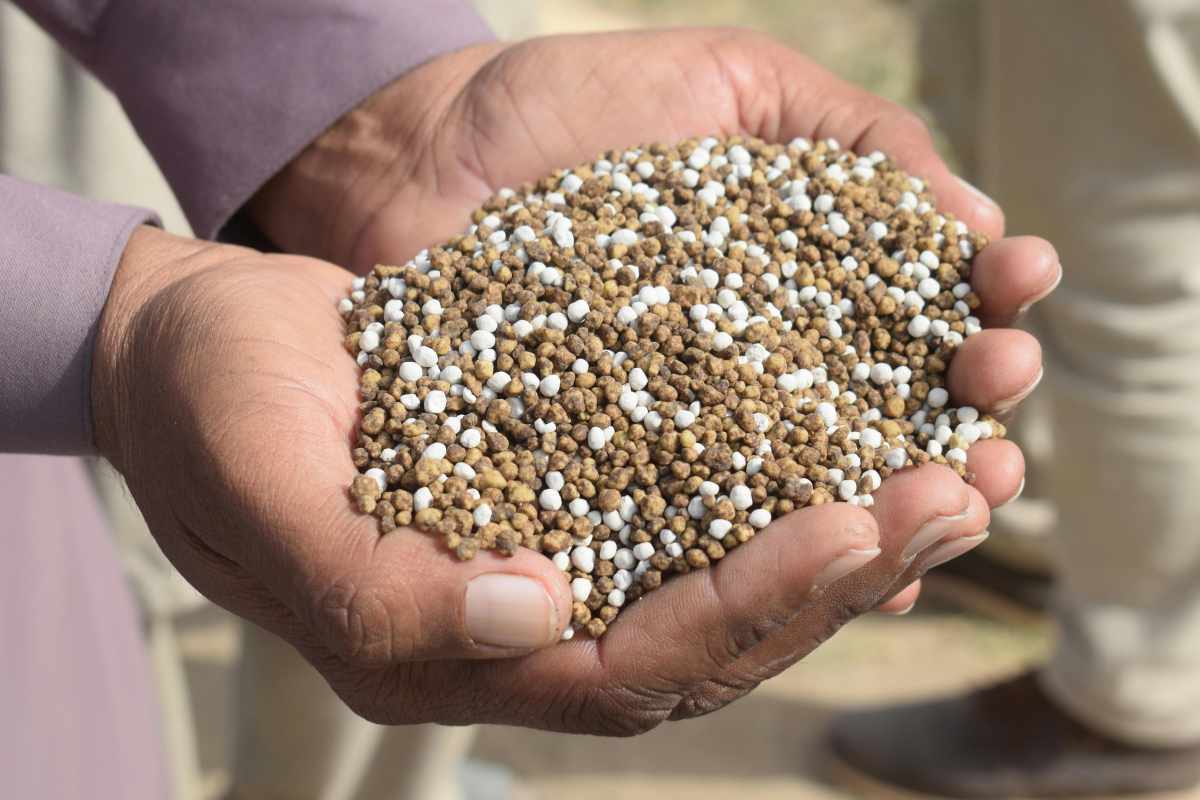
Use a balanced fertilizer to support healthy growth. Apply it when the plants start to grow, and repeat every few weeks.
Avoid high-nitrogen fertilizers, as they can promote leafy growth at the expense of potatoes.
Harvesting Your Potatoes
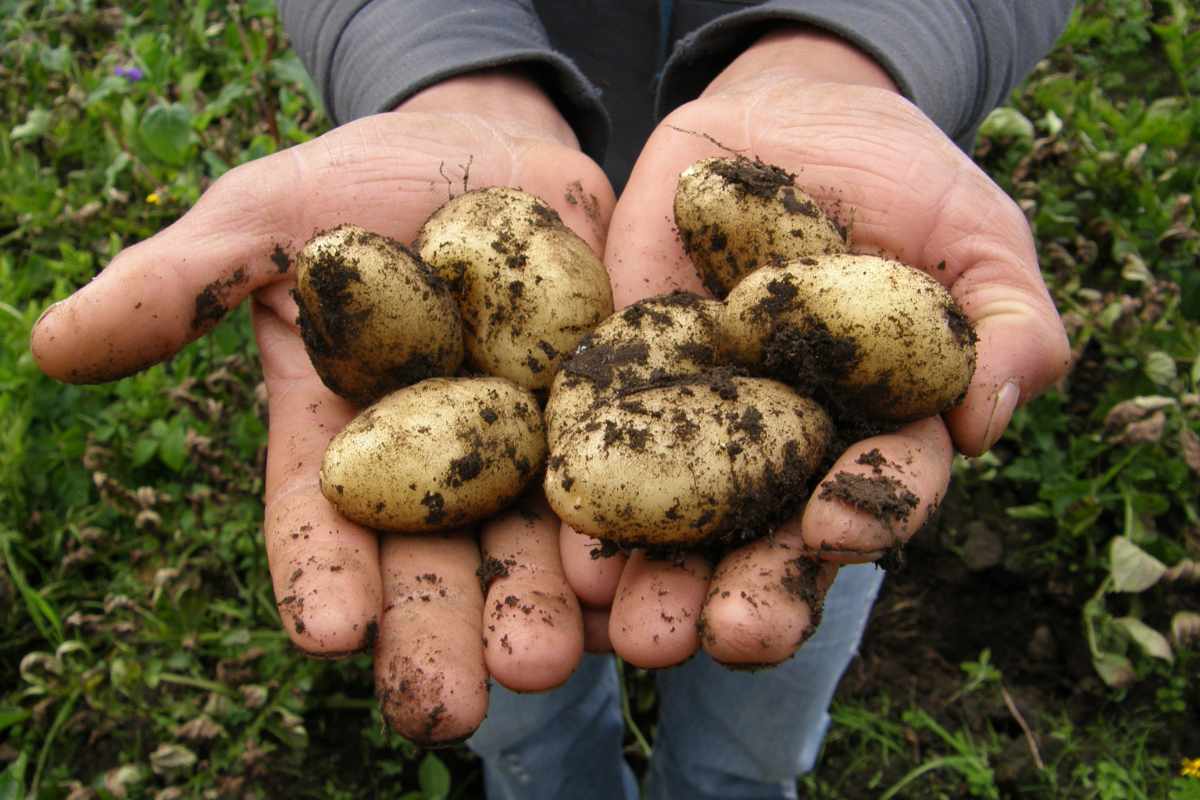
Potatoes are typically ready to harvest when the foliage begins to die back, usually about 2-3 months after planting. Here's how to harvest:
Signs of Readiness
Leaves begin to yellow or die off.
The plant stops producing flowers.
Gently pull back the soil to check for mature tubers.
Harvesting Method
Tip the container over gently and remove the soil.
Harvest the potatoes carefully to avoid damaging them.
Store them in a cool, dark, and dry place to cure for 1-2 weeks before eating.
Troubleshooting Common Potato Growing Issues
Growing potatoes in containers can seem quite easy, but like any gardening project, it may come with a few challenges.
Here’s how to troubleshoot common issues:
Problem: Yellowing leaves
Solution: This may be due to nutrient deficiencies. Add a balanced fertilizer to the soil to replenish nutrients.
Problem: Small or sparse potatoes
Solution: This can be caused by too little soil or too much water. Ensure the container has proper drainage and add more soil if necessary.
Problem: Potato rot
Solution: Avoid overwatering and ensure the container has proper drainage to prevent waterlogged soil.
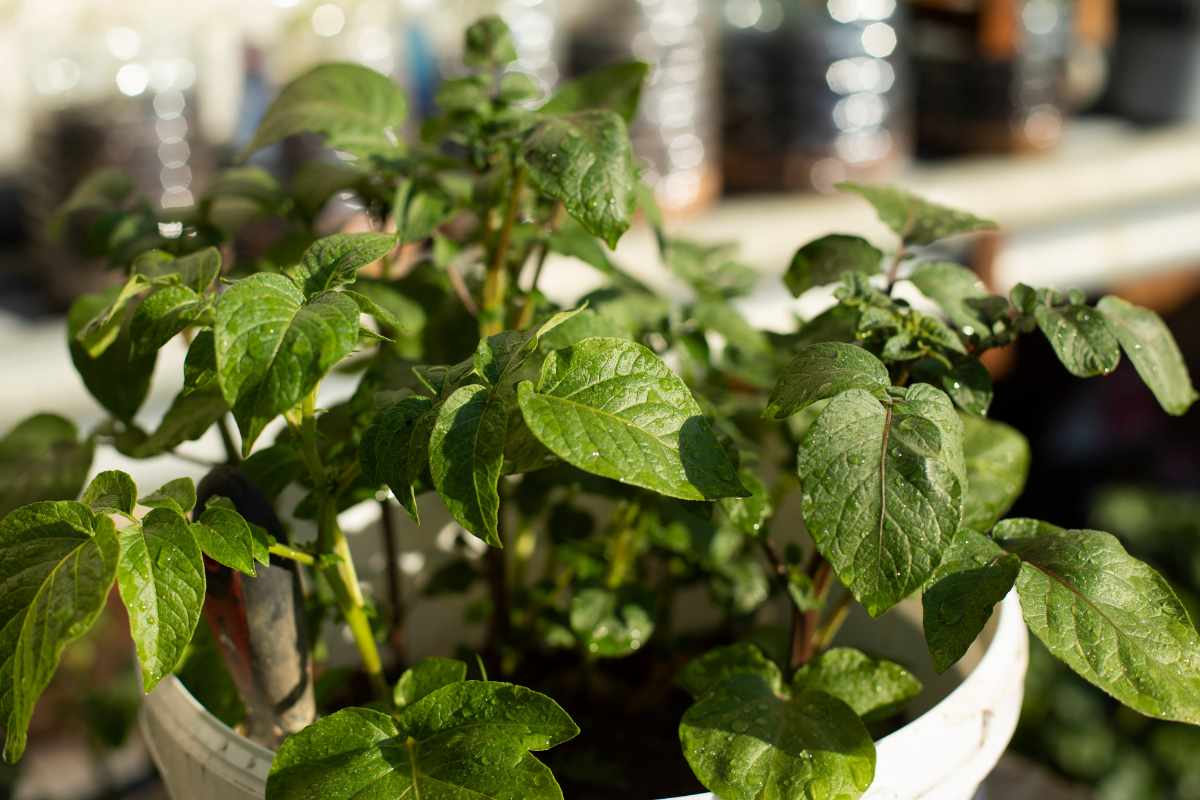
Container potato gardening is a simple yet rewarding way to grow your own potatoes, even in limited space.
By selecting the right container, soil mix, and potato variety, and by following these care tips, you’ll be harvesting fresh, delicious potatoes in no time.
Good luck and enjoy the fruits (or tubers) of your labor!
Enjoy the Video Tutorial

Source: MIgardener
Did you find this post useful or inspiring? Save THIS PIN to your Gardening Board on Pinterest!😊

Once again, thank you for visiting our website!
We hope you've enjoyed exploring the content we've created for you.
Give yourself the chance to learn, get inspired, and have even more fun, keep browsing...
More Gardening Tips 👇🏼👇🏼