
Learn How to Grow Cilantro Indoors


If you love fresh herbs, learning to grow cilantro indoors is a game-changer.
Cilantro thrives in cool temperatures, needs consistent light, and prefers a deeper container to accommodate its taproot.
With a few smart tweaks—like preventing bolting, managing light the right way, and doing succession sowing—you can enjoy tender leaves on your windowsill all year.
Light & Temperature That Prevent Bolting

Cilantro is a cool-season herb. Indoors, your two biggest levers are light intensity and room temperature.
Make the most of the light
South- or west-facing windows work in bright seasons, but winter light is often too weak. Add LED grow lights to keep plants compact and leafy.
Aim for a bright, “late morning sun” feel. If plants grow leggy or lean toward the window, they need more intensity or closer lights.
Keep a consistent day length of 12–14 hours with a timer. This supports steady growth without stressing plants.
Keep it cool
Target 60–70 °F (15–21 °C). Warm rooms push cilantro to bolt (shoot up and flower), which makes leaves sparse and bitter.
If your kitchen runs hot, move pots to a cooler room or increase airflow with a small fan to stabilize temperature and reduce disease.
Pots, Soil & Drainage
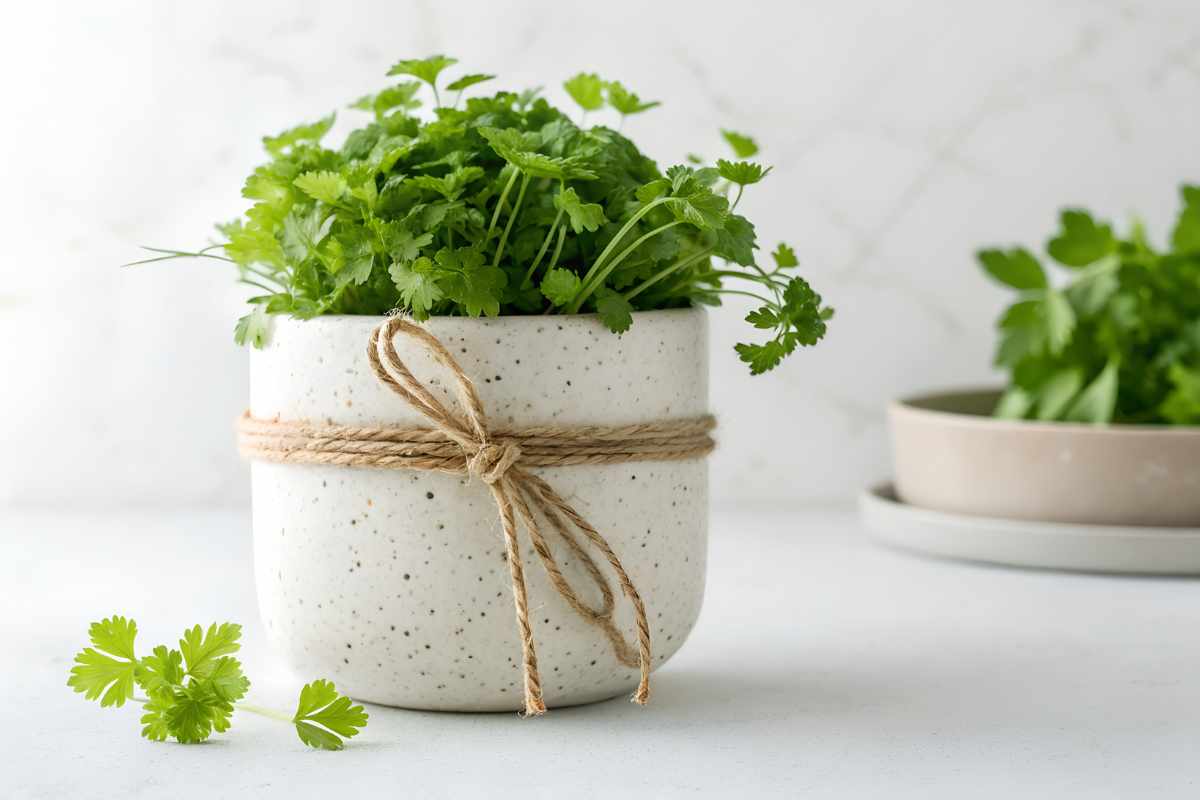
Cilantro develops a central taproot, which is why shallow trays disappoint.
Choose a 6–8 in (15–20 cm) deep pot so roots can run without circling tightly.
Use a fluffy, well-draining soilless potting mix and a container with generous drainage holes.
Add a thin layer of perlite or coarse material at the bottom if your pots tend to hold water.
Water thoroughly until a little drains out, then let the top inch (2–3 cm) of soil dry slightly before watering again. Bottom-watering can help keep foliage dry and reduce damping-off.
Sowing & Sprouting (Do This Once, Enjoy for Weeks)

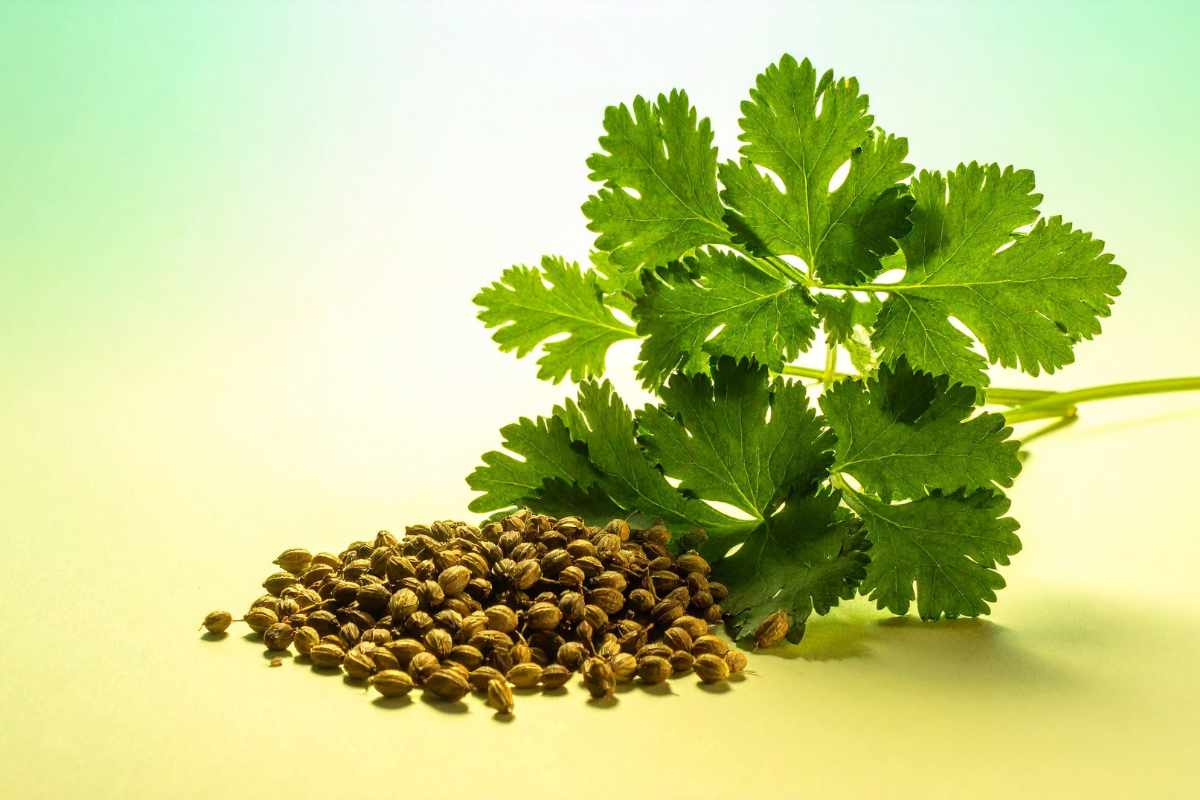
Cilantro “seeds” are actually a pair of seeds inside one husk (coriander).
You can gently crush or split them between your fingers to boost germination, but it isn’t essential.
Depth: Sow ¼ in (6 mm) deep.
Spacing: Broadcast sparsely or sow in shallow rows, then thin to 2–3 in (5–8 cm) once seedlings are established.
Germination: Expect sprouts in 7–21 days, depending on temperature and moisture.
First feed: After the first true leaves appear, feed lightly with a diluted, balanced liquid fertilizer every 2–3 weeks, or mix a small amount of slow-release fertilizer into the potting mix at planting.
Water & Feeding Routine

Cilantro enjoys even moisture but hates soggy feet.
Water when the top inch (2–3 cm) feels dry; in cooler rooms, that may mean less frequent watering.
Use a light, regular feed (diluted to half strength) about every 2–3 weeks, or stick to a mild organic fertilizer to avoid overfeeding.
Improve airflow to reduce fungal issues—keep leaves dry, space plants, and avoid crowding under lights.
Pruning, Harvest & Storage
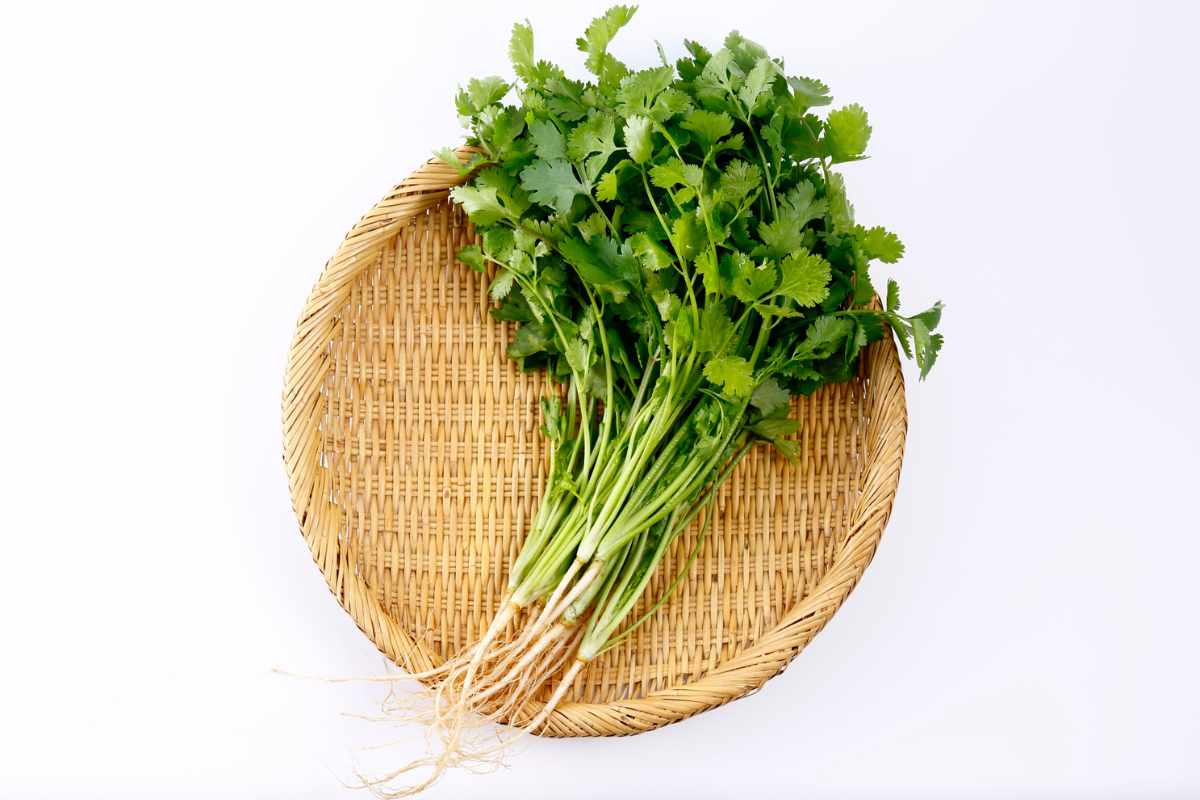
Begin harvesting when plants are 6–8 in (15–20 cm) tall.
Use sharp scissors to snip outer stems at the base, leaving the inner growth to keep producing.
Take no more than one-third of the plant at a time to prevent a growth stall.
For storage, wrap rinsed, dried sprigs loosely in a paper towel and seal in a container in the refrigerator for up to a week. For longer storage, chop and freeze in olive oil portions or make a quick cilantro pesto.
If a plant bolts, let part of it mature so you can harvest coriander seeds. Dry the brown seed heads in a paper bag, then store seeds in a cool, dark place.
Troubleshooting (Problems → Causes → Fixes)
Leggy or floppy plants
This usually happens when plants don’t get enough light or the light source is too far away.
Increase light intensity, lower lights to about 6–10 inches (15–25 cm) above the plants, and extend the light period to 12–14 hours per day.
Sudden flowering (bolting)
Warm temperatures, stress, or long days can trigger premature flowering.
Keep temperatures around 60–70°F (15–21°C), maintain even soil moisture, harvest regularly, and consider using slow-bolt varieties to prevent this issue.
Yellowing leaves
Yellow leaves are often caused by overwatering or nutrient imbalance.
Allow the top inch of soil to dry out between waterings, provide light feeding every 2–3 weeks, and make sure your pots have proper drainage.
Damping-off (seedlings collapsing)
This occurs in wet, stagnant conditions and can quickly kill seedlings.
Improve airflow, water from the bottom instead of the top, avoid overwatering, and use a sterile potting mix to reduce risk.
Aphids or spider mites
These pests thrive on stressed plants, often in dry air.
Rinse leaves regularly, apply insecticidal soap if needed, slightly increase humidity, and isolate affected plants to prevent spreading.
Fresh Flavor on Your Windowsill—All Year
With the right light, a deep pot, and cool indoor temps, cilantro becomes one of the easiest herbs to keep in steady rotation.
Build a simple rhythm—sow, thin, harvest, reseed—and you’ll have bright, fragrant leaves ready for tacos, chutneys, soups, and salads whenever inspiration strikes.
Enjoy This Video Tutorial

Source: Daisy Creek Farms with Jag Singh
Don’t forget to Subscribe to our Newsletter to receive amazing tips and tricks about Gardening and the FREE Ebook Green Living Strategies!
Did you find this post Useful or Inspiring? Save THIS PIN to your GARDENING Board on Pinterest! 😊

Once again, thank you for visiting our website!
We hope you've enjoyed exploring the content we've created for you.
Give yourself the chance to learn, get inspired, and have even more fun, keep browsing...
More Gardening Tips 👇🏼👇🏼