
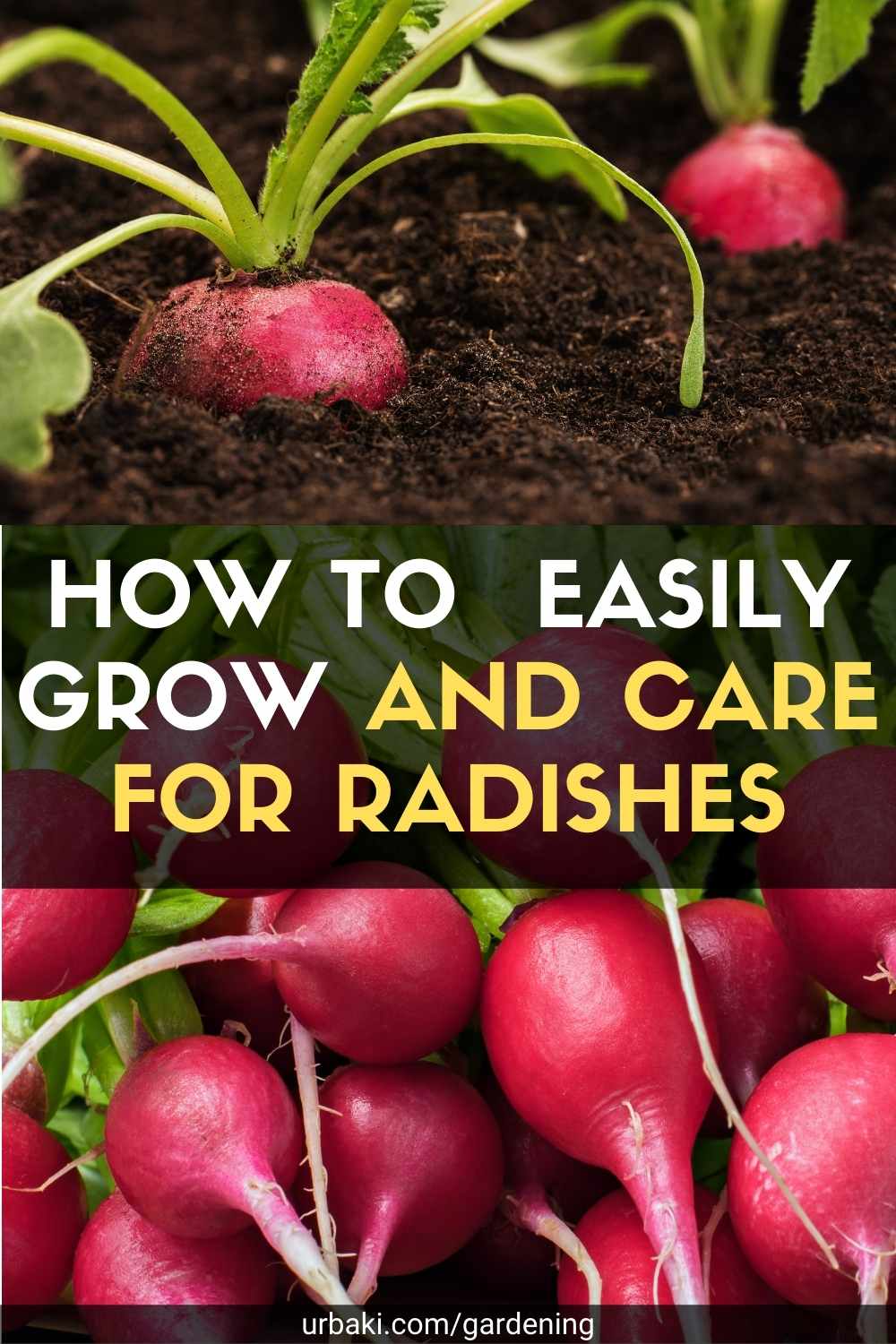
How to Easily Grow and Care for Radishes


When you think of radish (Raphanus sativus), you probably imagine that the root of the vegetable is small, round, red, and spicy. By far the most popular consumed and cultivated radishes fit this description.
While there are longer varieties and different colors of radishes, small, round radishes are so quick and easy to grow that they pretty much define what a radish should be. And yet even this humble globe radish offers a fair amount of variety. They can be round or oblong, warm or soft, red, pink, purple, white, or bicolor.
Asian radish varieties are often referred to as winter radishes because they ripen towards the end of the season and can be stored throughout the winter.
Daikon is a Japanese word that means "big root" and some of these radishes can grow, although not all Asian radishes are long. Black radishes, including Spanish black radish, tend to be the spiciest.

Do not forget that radish tips or vegetables are also edible, as are green beans. There are even varieties, such as the 'Rabo de Rato' radish, which are grown specifically for their pungent fruits, which grow throughout the summer.
Radishes are annual vegetables that are members of the Brassicaceae or Cruciferous family, along with broccoli, cabbage, cauliflower, and kale. They are started from seed in spring (for a spring crop) or late summer (for a fall crop). Some of the smaller radishes ripen in just 25 days. Larger winter radishes can make you wait up to 60 days.

How to plant radishes
Radishes, like most vegetables grown for their roots, are sown directly in the garden. They can be started until early spring, once the soil is relatively dry, and again in late summer for a fall garden, and even late fall with the protection of a cool frame.
Since radishes grow quickly, they can be squeezed among other plants in the garden. Radishes will be harvested before other vegetables need additional space. Also, radishes are good for loosening and cultivating the soil for slower germinating vegetables like carrots.
Sow the seeds 1/4 to 1/2 inch deep. You will want at least 5 cm between plants, but the seedlings can be thinned and eaten when they are 1 to 2 cm tall.
Radish care
Light
Radish plants need full sun or partial shade. Small common radishes must grow quickly in cold climates, so they need plenty of suns.
Soil
Radishes grow best in rich, well-drained soils with a slightly acidic to neutral pH of 6.0 to 7.0. The most important thing is that the soil must be loose and not compacted. The roots do not grow well in hard or rocky soils. Sandy and clay soils are the best.
Water
Radish plants generally need 1 inch of water per week. Dip the soil as needed (more often if the soil drains too quickly) to reach the roots, depending on the type of radish you are planting.
Temperature and humidity
Radishes are cool-season vegetables that can ripen very quickly. Small, round varieties will become woody if grown at high temperatures. Radishes decrease in quality when the temperature increases. They can become hard and woody or fluffy with hollow centers. Once a radish jumps or becomes a seed, the bulb stops forming.
Fertilizer
Since radishes grow very fast, they do not need fertilization as long as you start with rich soil. If necessary, improve the soil with compost before planting.
Harvest
Check the size of radish bulbs frequently to make sure you harvest them before the plants begin to decline. You can feel the size of the caps just below the floor line or you can pull a few to check. For a continuous crop, plant a new crop in succession every 10 to 14 days, until very hot.
Most radishes turn to seeds in hot weather. Edible radishes are a great substitute during the summer because you want them to sprout.
We hope you enjoy this video about how to grow radishes - complete guide:
Source: MIgardener
Did you find this post Useful or Inspiring? Save THIS PIN to your GARDENING Board on Pinterest! 
Once again, thank you for visiting our website!
We hope you've enjoyed exploring the content we've created for you.
Give yourself the chance to learn, get inspired, and have even more fun, keep browsing...
""
More Gardening Tips 👇🏼👇🏼